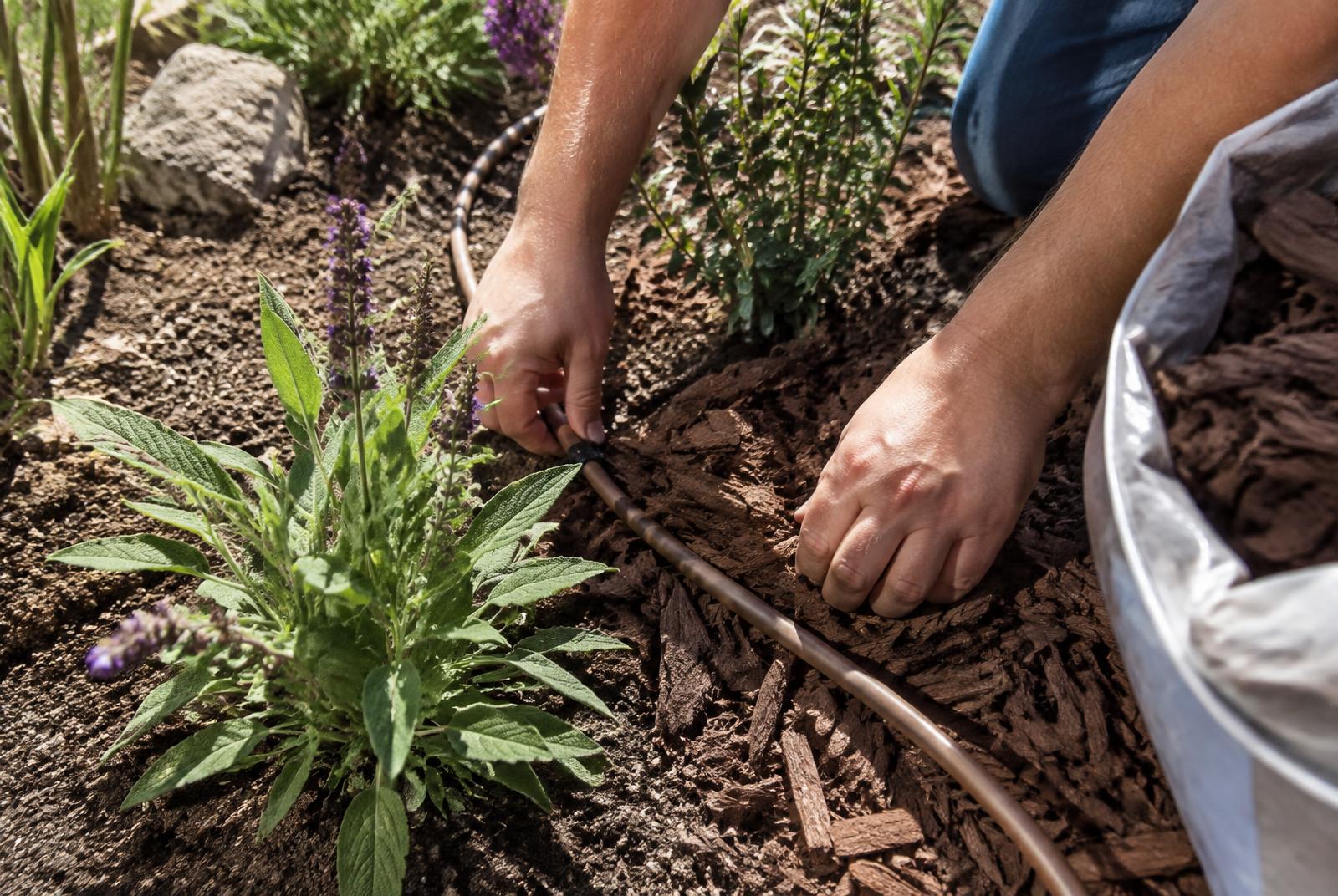
Watering in a drought year
Water less often, but much deeper. Here is how to tell when.
- ✓A deep soak every 10–14 days beats a short drink every day.
- ✓New plants need about twice a week their first summer, then taper.
- ✓Use the screwdriver test before you turn the water on.
- ✓Two inches of mulch cuts evaporation dramatically.
Working with Utah soil
Alkaline, often heavy, and better than its reputation.
- ✓Add compost to beds, but go lean for native plantings.
- ✓Do not amend the planting hole for trees — amend the whole bed.
- ✓Yellowing leaves with green veins usually means iron, not nitrogen.
- ✓Avoid working clay soil when it is wet.
Planting so it lives
Most plant failures happen in the first three weeks.
- ✓Dig the hole twice as wide as the pot and no deeper.
- ✓Loosen circling roots before the plant goes in.
- ✓Keep the crown level with the soil surface, never buried.
- ✓Water in thoroughly to settle the soil around the roots.
Gardening for pollinators
Small choices that make a real difference to bees and monarchs.
- ✓Plant in groups of three or more so pollinators can find them.
- ✓Aim for something in bloom from April through October.
- ✓Milkweed is the only plant monarch caterpillars can eat.
- ✓Leave stems and seed heads standing over winter.
A Davis County garden year
What to do, month by month, along the Wasatch Front.
- ✓April: cut back last year's stems, plant cool-season crops.
- ✓May: plant tomatoes once the soil is warm, after mid-month.
- ✓July–August: water deeply, deadhead, do not fertilize perennials.
- ✓September–October: the best planting window of the whole year.
Still have a question?
Read the blog for longer pieces, or come to a free Saturday class.